
Verified Refrigeration Savings Across Your Hotel Portfolio
Property management companies and hotel groups use eTemp to reduce refrigeration energy costs across kitchen, banquet cold storage, and bar systems—with verified data suitable for ESG reporting, investor disclosure, and asset-level benchmarking.
Customer testimonial — W Washington
Within 17 months, we'd made our money back — that's the kind of project we invest in over and over again.
Refrigeration Cost Challenges Across Hotel Assets
Refrigeration loads that vary significantly by property type
A select-service property carries a different refrigeration profile than a full-service hotel with banquet facilities and multiple F&B outlets. Property management companies managing mixed portfolios face difficulty standardizing energy efficiency programs when unit types, counts, and usage patterns vary across assets. eTemp's pilot-first process accounts for this variance—each location's baseline is measured independently.
ESG reporting with insufficient equipment-level data
Institutional investors, lenders, and brand standards increasingly require Scope 2 emissions data at the property and portfolio level. Generic utility benchmarking doesn't provide the equipment-level granularity needed for accurate disclosures. eTemp's post-installation reports include per-system CO₂ reduction data—approximately 2 metric tonnes per refrigeration unit per year—structured for reporting use.
Maintenance costs that erode NOI
Compressor failures, refrigerant leaks, and component replacements are among the more disruptive maintenance events in hotel facilities. They interrupt food service operations, require emergency service dispatch, and generate capital costs that aren't always recoverable in operating budgets. Reducing compressor cycle frequency by 50% materially extends the interval between service events.
Performance Across Hotel Refrigeration Systems
Kitchen and Banquet Cold Storage
Full-service hotels and convention properties carry significant cold storage loads—walk-in coolers, reach-in pass-throughs, and blast chilling equipment running continuously through food service operations. eTemp reduces compressor run time and energy consumption across these units without modifying refrigerant systems or disrupting service.
Bar Coolers and Back-Bar Systems
Bar and beverage coolers cycle frequently during peak service hours and maintain temperature continuously during off hours. eTemp's waste recovery technology reduces compressor cycling across variable-demand cycles, delivering energy savings across both peak and off-peak periods. Bar system units are included in pilot scope alongside kitchen equipment.
Portfolio Standardization for Property Management Companies
eTemp's pilot-to-rollout process is designed for portfolio operators. Following a pilot at one or two representative properties, the verified savings report provides the documentation needed to standardize deployment across the portfolio—with projected ROI timelines, per-property savings breakdowns, and procurement pricing for phased rollout.
ESG and Sustainability Reporting
Each eTemp deployment generates approximately 2 metric tonnes CO₂ reduction per refrigeration system per year. For a hotel property with 30 refrigeration units, that represents approximately 60 metric tonnes of annual CO₂ reduction per property—reportable at the asset level, aggregatable at the portfolio level, and documented with measurement data rather than estimates.
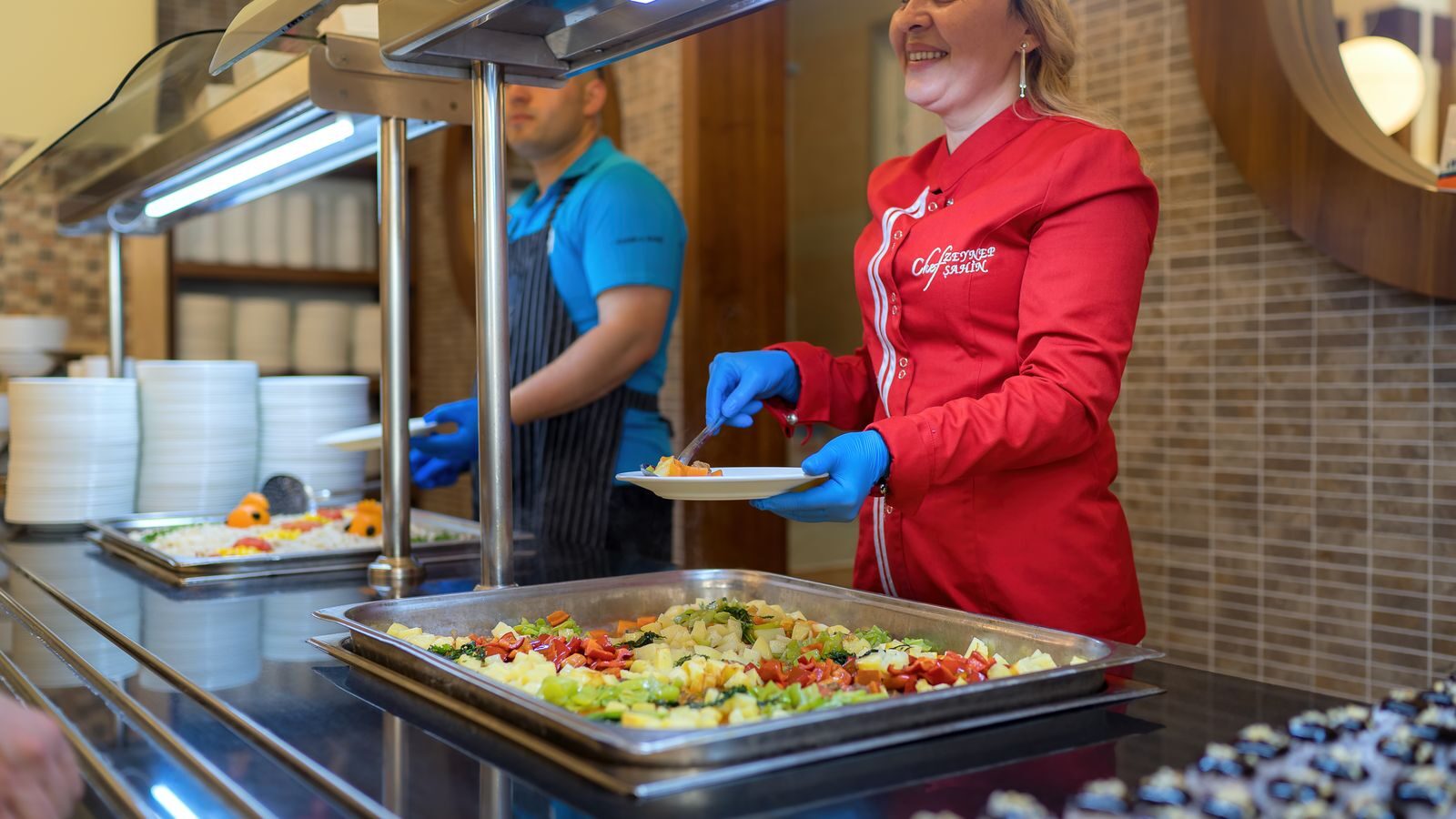
From kitchen and banquet cold storage to bar coolers, hotel properties carry significant refrigeration loads across every outlet.
Performance Benchmarks for Hotel Refrigeration Portfolios
One Location Is All It Takes to Prove the Case.
A pilot at one property gives you verified, per-unit data that supports a portfolio-wide deployment decision.